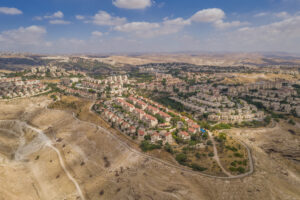

Every May 14, pro-Palestinians observe “Nakba Day” — marking what they call the catastrophic displacement of Palestinian refugees when Israel declared independence in 1948. But the story most people hear leaves out crucial facts about who these “refugees” actually are, and why the number keeps growing.
The Original Displacement
When Israel won its War of Independence in 1948, roughly 700,000–750,000 Arabs left their homes. Many did so not because Israeli forces drove them out, but because Arab leaders urged them to leave, promising a triumphant return after the Jews were defeated. That defeat never came.
Those 750,000 people resettled — mostly in Jordan or within Israel itself. That should have been the end of the refugee story. Instead, it was just the beginning.
How 740,000 Became 5.9 Million
Today, the UN counts 5.9 million Palestinian refugees. How? Because Palestinians are the only people in history granted hereditary refugee status in perpetuity — passed down through generations regardless of whether descendants have ever set foot in Israel, hold foreign citizenship, or live comfortably in Europe or America.
By contrast, every other refugee population in the world operates under the 1951 Refugee Convention, which defines a refugee as someone personally outside their home country due to a well-founded fear of persecution. Crucially, that status ends when someone gains citizenship elsewhere, integrates locally, or when the original circumstances no longer apply.
For Palestinians, those rules don’t apply. Their status never ends. It only multiplies.
Two UN Agencies: One Rule for Everyone, Another for Palestinians
Every refugee group on earth falls under the UNHCR (UN High Commissioner for Refugees), whose founding budget was $300,000 and whose mission is to resolve refugee situations through resettlement, integration, or repatriation.
Palestinians alone are handled by a completely separate agency: UNRWA (UN Relief and Works Agency), created exclusively for them in 1950 with a budget of $33.7 million — 110 times the money allocated for all other refugees in the world combined. Unlike UNHCR, UNRWA has no mandate to end refugee status. It registers descendants, expands services, and grows its rolls — with no exit strategy.
UNRWA’s own definition covers any descendant (through the male line) of someone who lived in Mandatory Palestine between June 1946 and May 1948 — no matter where they were born, what passport they hold, or how many generations removed they are from 1948.
Most “Refugees” Already Have Citizenship
Consider where these 5.9 million people actually live:
- Jordan: Over 2 million registered Palestinian “refugees” hold full Jordanian citizenship, with passports and voting rights. Under any standard legal definition, they are not refugees.
- Syria: Palestinians had near-equal economic and social rights prior to the civil war.
- Lebanon: Palestinians face more restrictions, but they have lived there for 75+ years — the result of deliberate host-country policy, not ongoing persecution from a 1948 war.
Arab states have often deliberately refused to fully naturalize Palestinians — not out of neglect, but as a political strategy to preserve the refugee claim and maintain pressure on Israel.
Every Other Displaced People Moved On
The 20th century was full of massive, wrenching displacements — none of which produced multigenerational refugee counts:
- Post-WWII Europe: Tens of millions displaced; resolved through resettlement and integration.
- Jewish refugees from Arab countries: Around 800,000 Jews were expelled from Arab nations in the same period as the Nakba. They were absorbed by Israel and other countries. No UN agency tracks their descendants. No “right of return” is demanded for them.
- India-Pakistan Partition: 10–20 million displaced; descendants are not counted as refugees.
- Greek-Turkish population exchanges, Korean War, Vietnamese boat people: All resolved.
Why It Stays This Way
The Palestinian refugee issue is not unresolved because a solution is impossible. It’s unresolved because keeping it unresolved is useful — politically.
The 1948 war began when Arab states invaded the newly declared Israel after rejecting a UN partition plan that would have given Palestinians their own state. Displacement flowed in both directions. But only one side’s descendants were frozen in legal limbo.
Non-binding UN Resolution 194 called for return of those “wishing to live at peace” — a condition Arab leadership never accepted. Subsequent wars, the rejection of peace offers at Camp David, and decades of rejectionism have all prolonged the situation. Meanwhile, UNRWA has every institutional incentive to expand its rolls rather than shrink them.
The result: a “refugee” population that grows with every generation, an agency with no mandate to resolve what it manages, and a political narrative built not around humanitarian protection — but around a “right of return” that, if implemented, would demographically end Israel as a Jewish state.
Bottom Line
The word “refugee” has a meaning, and it has limits. It describes real suffering, real displacement, real people in need of protection. But it was never meant to be a permanent political identity inherited by grandchildren who were born as citizens of other countries and have never experienced persecution a day in their lives.
Every other displaced population in modern history — Europeans after WWII, South Asians after Partition, Jews expelled from Arab countries — rebuilt their lives and moved forward. Their descendants are not counted as refugees. They were never meant to be.
The Palestinian “refugee” count exists at 5.9 million not because of an ongoing humanitarian crisis, but because a unique, purpose-built UN agency has spent 75 years institutionalizing dependency, resisting resolution, and keeping a number artificially inflated in service of a political goal: the demographic dismantlement of Israel.
Sources
UNHCR, UNRWA, Kohelet, Middle East Forum, AJC, Human Rights Voices, UNRWA, JNS, UNRWA, Wikipedia