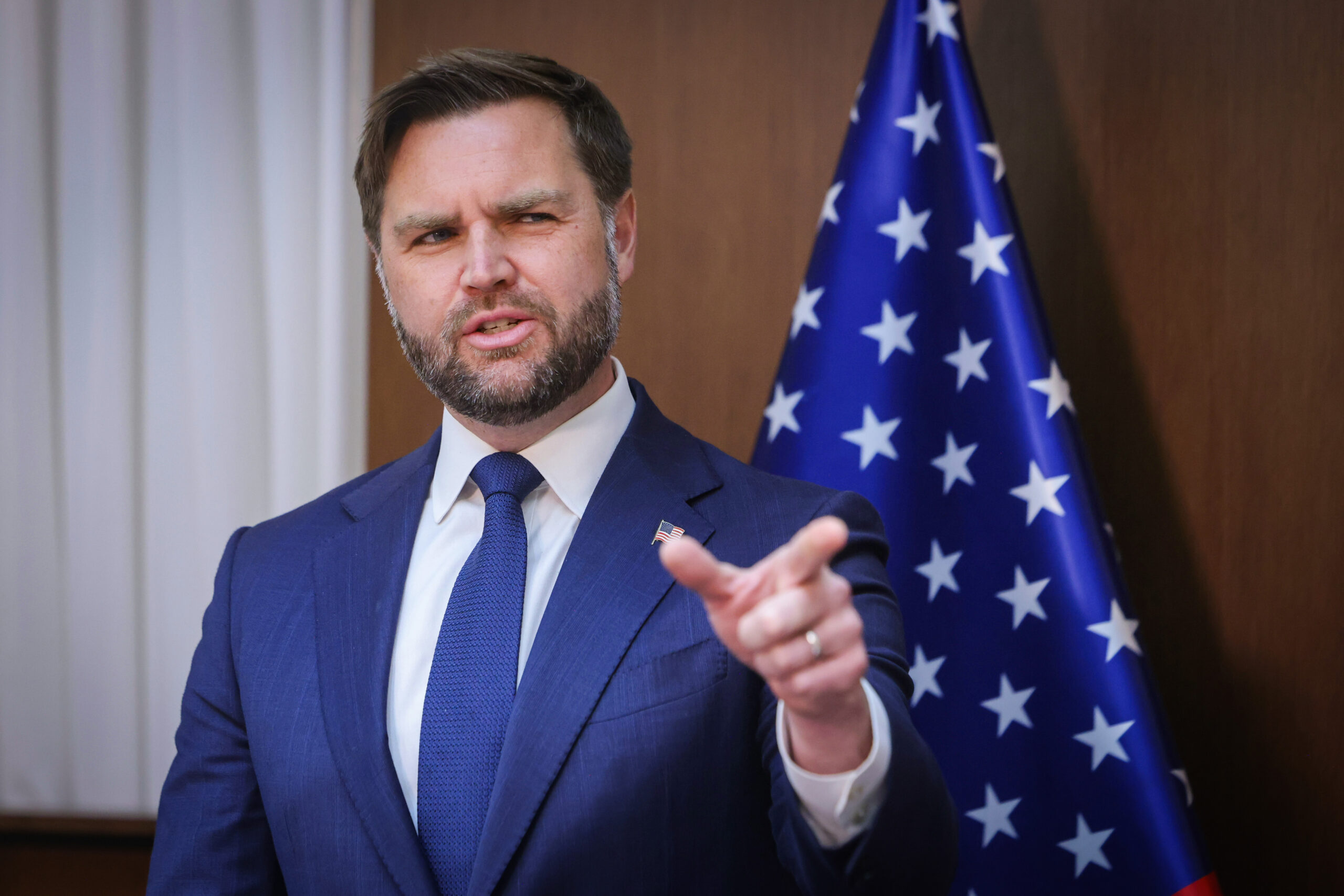
On June 18, Vice President Vance accused Israeli officials of ingratitude after they criticized Trump’s Iran deal, noting that two-thirds of the defensive weapons protecting Israel this past three months “have been built by American hands and paid for by American tax dollars.” He went further, claiming Israeli ministers had “very personally attacked” the president.
Both claims collapse under scrutiny. So does the premise behind them.
First: no one personally attacked Trump. Israeli officials criticized the deal — a deal that, by most accounts, requires Israel to pull its forces out of Lebanon, leaving northern Israeli towns exposed to Hezbollah. That’s policy disagreement, not personal attack. Even Israeli National Security Minister Itamar Ben-Gvir, one of the harshest critics, called Trump “our friend” in the same breath.
Second: allies are allowed to disagree. The idea that Israel should swallow its objections to avoid upsetting its patron misunderstands what an alliance is. The U.S. and Iran cannot dictate Israeli troop withdrawals from Lebanon without Israel’s consent — Israel wasn’t even a party to that deal. A country doesn’t trade its sovereignty for assistance.
Third, and most fundamentally: this isn’t charity. It’s one of the best-performing investments in the U.S. defense budget.
- At least 75% of the $3.8 billion in annual U.S. military aid to Israel must be spent on American weapons and systems. Economists estimate this generates over $40 billion a year in returns to the U.S. economy through co-development, tech transfer, and exports — a better than 10-to-1 return that almost nothing else in the federal budget matches.
- The 2016 Obama-era MOU actually made this worse for Israel, not better: it phased out “offshore procurement,” which had let Israel spend roughly 26% of U.S. aid on its own defense industry. Now virtually all of it must go to American contractors — redirecting over $1 billion a year away from Israeli manufacturers and toward U.S. ones.
- That aid buys the U.S. real capability. In 2026, Israel delivered the first SkyHunter interceptors — adapted from Iron Dome — to the U.S. Marine Corps, giving them their first expeditionary air defense system in 30 years. The same system helped shield the UAE during Iran’s missile barrages.
- Israel also combat-tests American weapons in ways no other ally does. Its June 2025 air campaign against Iran — 200 U.S.-made F-35s, F-16s, and F-15s — proved American airpower superior to Russian and Chinese systems in real conditions, and directly boosted U.S. arms sales worldwide.
- Compare the price tag: the U.S. spends roughly $80 billion a year maintaining 750 bases in over 80 countries to defend allies like Japan, Germany, and South Korea — countries that still rely on American troops. Israel has never asked for U.S. boots on the ground. It funds over 90% of its own military and handles its own defense entirely.
- And in the recent war, Israeli intelligence and airpower dismantled the first two layers of Iran’s regime during Operation Epic Fury — work that let Trump negotiate from strength. Even Defense Secretary Pete Hegseth told other U.S. allies to “take notes” from Israel. The “two-thirds of defensive weapons” Vance cited were far from a handout. They were the (nominal) cost of fighting alongside the world’s most feared intelligence service and air force against a shared enemy — and that earns Israel the right to criticize how the war ends.
One more point worth remembering: the $3.8 billion in U.S. aid amounts to just 8.4% of Israel’s $45 billion defense budget. It’s not the lifeline it’s often described as — and Netanyahu himself has called for phasing it out altogether, precisely to free Israel from this kind of leverage.
Vance has the relationship backwards. The U.S. isn’t bankrolling Israel’s defense out of generosity. It’s getting a battle-tested, high-yield return on a fraction of what it spends defending anyone else. And it’s an investment Israel no longer needs.
Bottom Line
Vance has the relationship backwards. This was never charity flowing one way — it’s a partnership that pays America back many times over, while costing Israel more than people realize.
The aid Vance touts is just 8.4% of Israel’s $45 billion defense budget, and Israel doesn’t need it anymore. What it has cost is real: billions diverted from Israel’s own defense industry, and a recurring loss of sovereignty, as the U.S. has repeatedly used that aid as leverage to pressure Israel into concessions to its enemies. That’s precisely why Netanyahu has called for phasing it out — so Israel can stand fully on its own. What the U.S. needs is what Israel actually offers: a battle-tested military that proves American weapons work under real fire, a partner that absorbs the cost of confronting shared enemies, and an ally that has never once asked for U.S. troops on its soil.
Sources
OpenSource Intel, Jerusalem Post, Breaking Defense, White House, Israel Truth Network, Breaking Defense, INSS, Israel Truth Network, Israel Truth Network, Ettinger Report, Quincy Institute, Wall Street Journal, Times of Israel