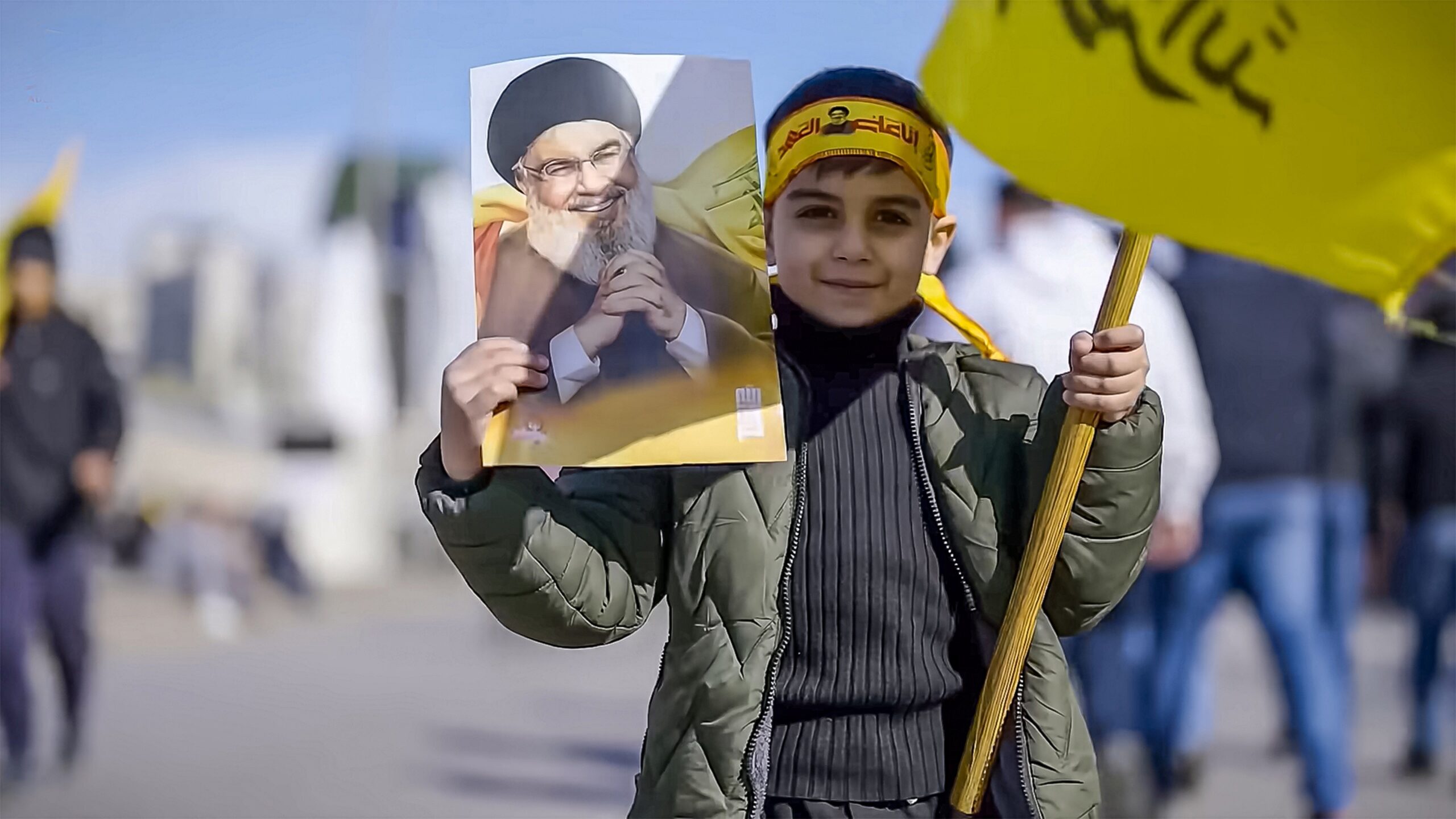
On June 19, 2026, Pulitzer Prize-winning journalist Glenn Greenwald tweeted that Hezbollah — the Iran-backed terror group — was created as a “defense force in response to vicious and bloody Israeli invasions of Lebanon.” The implication was that Israel invaded Lebanon in 1982 without provocation, and Hezbollah rose up to protect the country.
That’s the opposite of the truth. And we know this because Hezbollah said so itself.
Hezbollah’s Own Words Expose the Lie
The group’s own 1985 Open Letter manifesto lays out its actual goals: establishing an Islamic republic in Lebanon, expelling Western influences, destroying Israel, and pledging allegiance to Iran’s Supreme Leader.
Critically, the manifesto identifies America — not Israel — as Hezbollah’s primary enemy. Israel is framed largely as an extension of American power in the region: the Little Satan to America’s Great Satan. This language mirrors Iran’s foundational revolutionary doctrine, in which the United States is the ultimate target and Israel is its regional arm. Hezbollah was built as a weapon against the West, with Israel as a secondary front.
Early Hezbollah slogans called for turning Lebanon into an Islamic state. The group’s radio station — broadcasting from the eastern Lebanese village of Nabi Sheet — aired anthems from the Iranian revolution and chants praising Ayatollah Khomeini. This was an Iranian project, not a Lebanese one.
Hezbollah Has Never Protected Lebanon — It Has Terrorized It
Hezbollah has never been Lebanon’s protector. It has been Lebanon’s predator.
The group seeks to abolish the constitutional arrangement that guarantees a Christian president — the very foundation of Lebanon’s delicate political system. And it has backed up that goal with violence.
In 2005, Hezbollah assassinated Prime Minister Rafic Hariri — the man who ended Lebanon’s civil war — with a suicide truck bomb. It has repeatedly targeted Lebanese officials who challenged its authority or pushed for its disarmament.
More recently, it has called to overthrow the country’s Christian-led government, which, like Israel, wants Hezbollah gone. Lebanon itself has filed formal complaints with the United Nations over Iranian interference and demanded that Hezbollah be disarmed and brought under state control.
Hezbollah Predates the Israeli Invasion It Supposedly Responded To
So where did Hezbollah actually come from? Not from Israel’s 1982 invasion.
Hezbollah’s core elements emerged from Iranian Revolutionary Guard operations that began after the 1979 Islamic Revolution. Iranian clerics and agents partnered with Lebanese Shiite radicals — inspired by Khomeini — to build a militia committed to spreading Islamist revolution. Some accounts place its founding as early as 1981 — months before the Israeli invasion even began — with Iranian trainers already operating in Lebanon’s Beqaa Valley.
In those early years, Hezbollah was barely even fighting Israel. Only one of its early attacks — a 1983 car bombing in Tyre — targeted Israeli forces. The real resistance to Israel’s presence in Lebanon came from other groups: the Amal Movement, the Syrian Social Nationalist Party, and the Communist Party, which carried out most of the major suicide bombings against Israeli troops. Hezbollah’s first significant retaliation didn’t even come from Israel — it came from the United States, which in 1985 attempted a proxy assassination of Shia cleric Mohammad Hussein Fadlallah, striking his mosque in Beirut’s southern suburbs.
As for Lebanon’s “liberation” — Hezbollah didn’t even recognize Lebanon as a legitimate country until 1992, a full decade after its founding.
The story that Hezbollah was born to protect Lebanon is one the group and its backers invented after the fact — a PR strategy designed to obscure its identity as an Iranian proxy and build broader Arab support. In the meantime, it was busy fighting rival Lebanese factions like Amal, targeting Western forces, and pursuing an ideological agenda that had nothing to do with defending any country.
The Body Count Tells the Real Story
On April 18, 1983, Hezbollah detonated a car bomb at the U.S. Embassy in Beirut — 63 dead, 120 wounded. On October 23, 1983, a suicide bomber drove an explosives-packed truck into the barracks housing U.S. Marines and French peacekeepers — 241 Americans and 58 French soldiers were killed in an instant, in what remains the deadliest single-day death toll for the U.S. Marine Corps since Iwo Jima. On June 14, 1985, Hezbollah hijacked TWA Flight 847 en route from Athens to Rome, murdered an American passenger, and threw his body from the plane. On January 18, 1984, Hezbollah assassinated Malcolm Kerr, the president of the American University of Beirut. Between 2006 and 2011, Hezbollah carried out attacks against U.S. forces and coalition allies in Iraq.
Notice what’s missing from that list: Israel. These were attacks on Americans, on French peacekeepers, on Lebanese leaders. They were the actions of a group that identified America as its chief enemy and acted accordingly.
None of it had anything to do with protecting Lebanon.
Israel’s 1982 Invasion Was Not Unprovoked
And Israel’s 1982 entry into Lebanon wasn’t unprovoked aggression — it was the culmination of years of relentless attacks.
After being expelled from Jordan following the “Black September” crackdown of 1970, the Palestinian Liberation Organization (PLO) relocated its operations to southern Lebanon and turned the region into what became known as “Fatahland” — a Palestinian de facto mini-state with thousands of armed fighters using refugee camps as staging grounds for cross-border raids, infiltrations, and Katyusha rocket attacks on Israeli civilian communities in northern Galilee. This had been going on since the late 1960s and escalated sharply during Lebanon’s civil war, which began in 1975.
The attacks were relentless. The 1978 Coastal Road Massacre — in which PLO operatives hijacked a bus and killed dozens of Israeli civilians — prompted Israel’s first major incursion, the Litani Operation. Shelling and raids continued even after ceasefires. The immediate trigger for the full 1982 invasion, called “Operation Peace for Galilee,” was an assassination attempt on Israel’s ambassador to the United Kingdom, amid yet another round of PLO bombardment.
Bottom Line
Glenn Greenwald knows what Hezbollah is. He knows about the Marines. He knows about the manifesto. He knows that Hezbollah named America — not Israel — as its primary enemy, and that Israel appears in their own doctrine as a mere subsidiary of the Great Satan they’ve been at war with since 1979.
He chose to post that tweet anyway, recycling propaganda that Hezbollah’s own backers invented decades after its creation. This fits Greenwald’s pattern of consistently siding with Iran against Israel. He knows whose side he’s on. Now you do too.
Sources
Glenn Greenwald, CIA, FDD, Times of Israel, UN News, Fox News, Reuters, Israeli Ministry of Foreign Affairs, IDF, Britannica, Providence