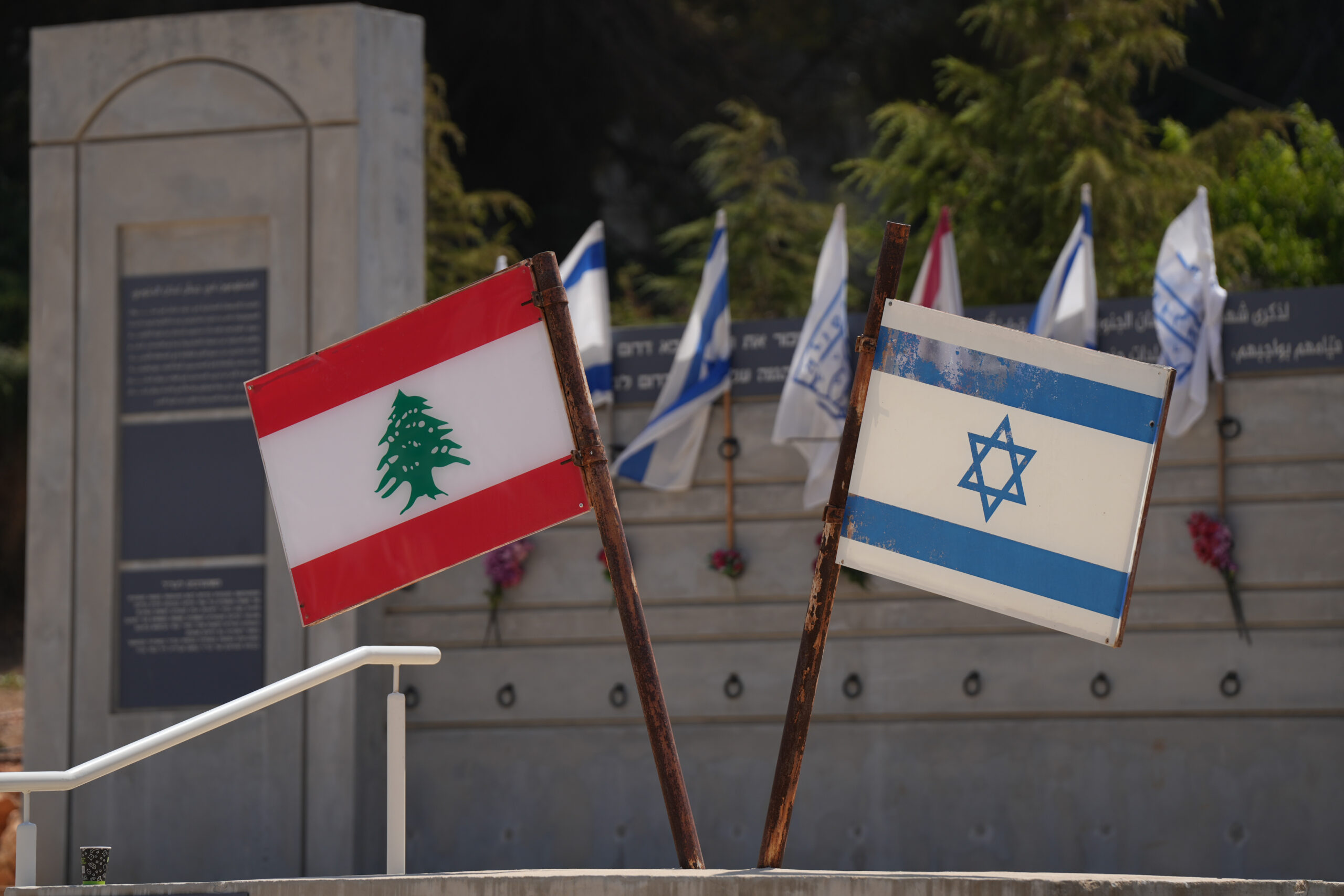
On July 5, 2026, popular anti-Israel influencer “Sarah” claimed Israel is deliberately targeting civilians in Lebanon, blowing up whole neighborhoods on purpose.
It’s the same claim anti-Israel voices make no matter where Israel operates. And it’s false.
The IDF targets Hezbollah. Full stop. That means commanders, rocket launchers, tunnels, weapons depots, and the fighters who use them. This is a defensive war Hezbollah started — yet Israel is somehow the one country expected to absorb it without fighting back.
How This War Started
Hezbollah — an Iran-backed terror army — opened fire on Israel on October 8, 2023, one day after Hamas’s massacre. It didn’t stop. Thousands of rockets, drones, and infiltration attempts followed, driving tens of thousands of Israelis out of their own homes in the north. Israel struck back to degrade Hezbollah’s arsenal and let those families return. The fighting escalated through 2024 and into 2026, with Hezbollah violating ceasefire terms along the way — including launching fresh attacks on Israel to avenge the killing of Iran’s supreme leader, Ayatollah Ali Khamenei, dragging Lebanon deeper into a war it didn’t need to fight.
How the IDF Actually Operates
The Israeli military is neither targeting civilians nor indiscriminately bombing civilian areas. It is engaging in precision warfare, and the record shows it:
- Intelligence-driven strikes. Airstrikes, drones, and ground raids hit verified military targets — Hezbollah command centers, senior leaders, rocket sites, tunnel networks. Footage repeatedly shows secondary explosions confirming munitions stored inside targeted buildings.
- Advance warnings. Israel routinely warns civilians before it strikes — leaflets, phone calls, texts, and Arabic-language social media posts — telling people to leave specific villages, buildings, or entire zones south of the Litani River.
- Targeted, not broad. Strikes hit specific threats — a launcher in a house, a militant on a motorcycle — not entire neighborhoods. Compare that to Hezbollah, which fires rockets blindly at Israeli towns.
Civilian harm happens. War in dense, urban terrain guarantees it. But collateral damage is not the same thing as a policy of targeting civilians. International law judges this by proportionality and distinction: did the strike aim at a real military target, and was the expected harm proportionate to the military gain? Hezbollah’s tactics are precisely what makes that harm harder to avoid.
Hezbollah Built This Problem on Purpose
Hezbollah doesn’t just fail to protect civilians. It uses them as cover, deliberately:
- Storing rockets, missiles, and drones inside homes, schools, hospitals, and mosques.
- Firing from populated neighborhoods, then relocating the launcher before Israel can respond.
- Digging tunnel networks under residential villages.
- Repurposing ambulances and civilian buildings for military use.
IDF footage has documented this repeatedly — weapons caches found in family homes, secondary explosions confirming hidden munitions when a “civilian” building is struck. This is the same playbook Hezbollah ran in 2006. Using civilians as human shields is a war crime. It’s also a deliberate strategy: it forces the IDF into impossible choices and inflates the civilian casualty count that shows up in headlines. Lebanese civilians pay the price for a war Hezbollah picked on Iran’s behalf, not Lebanon’s.
About Those Casualty Numbers
Reporters lean heavily on Lebanese Health Ministry casualty figures. A few things worth knowing about that data:
- The ministry doesn’t separate combatants from civilians in its counts.
- It operates under Hezbollah’s influence.
- Many of the “civilian” deaths counted are military-age men killed in Hezbollah strongholds, or people who stayed in zones Israel had already warned them to evacuate.
- Hezbollah, meanwhile, does not publish its own fighter death toll. Independent estimates put militant deaths — including senior commanders — in the thousands.
High casualty totals reflect brutal urban combat against an enemy embedded in civilian infrastructure with a rocket arsenal once estimated at 150,000 weapons. That’s a description of the battlefield Hezbollah built. It is not evidence of Israeli policy.
Even Lebanon’s Own Leaders Blame Hezbollah
Here’s what the “Israel is targeting civilians” narrative conveniently leaves out: a large share of Lebanon’s own leadership doesn’t buy it.
Lebanese President Joseph Aoun — a Maronite Christian — has repeatedly blamed Hezbollah for endangering Lebanon’s citizens and has looked to Israel as a partner in disarming the group. The leader of Lebanon’s Christian community has called Hezbollah an existential threat to his own people.
In July 2026, Aoun put it bluntly while defending a new US-brokered framework agreement aimed at dismantling Hezbollah: “I am not in love with Israel, but give me another solution, whatever it may be.” That’s not the language of a leader who believes Israel is deliberately slaughtering his citizens.
Bottom Line
Israel operates under international humanitarian law, investigates its own incidents, warns civilians before striking, and is trying to neutralize a group whose stated mission is Israel’s destruction.
Hezbollah fires indiscriminately at Israeli civilians, hides behind Lebanese civilians, and has never recognized any distinction between combatant and civilian as a constraint on its own conduct.
Lebanese civilians are suffering. But the cause isn’t Israeli malice — it’s Hezbollah’s decision to embed itself in Lebanese homes, schools, and hospitals while provoking a war with a much stronger military. The way out is the same one the UN already laid out in Resolution 1701: Hezbollah withdraws from the border, disarms south of the Litani, and the Lebanese state actually governs its own territory. Israel isn’t looking to occupy Lebanon or harm its people. It’s looking for security from a proxy army that Iran built for exactly this purpose.
Sources
X, France 24, IDF, HRW, JNS, West Point, PBS, Jerusalem Post, Jerusalem Post, Times of Israel, UN Resolution 1701