
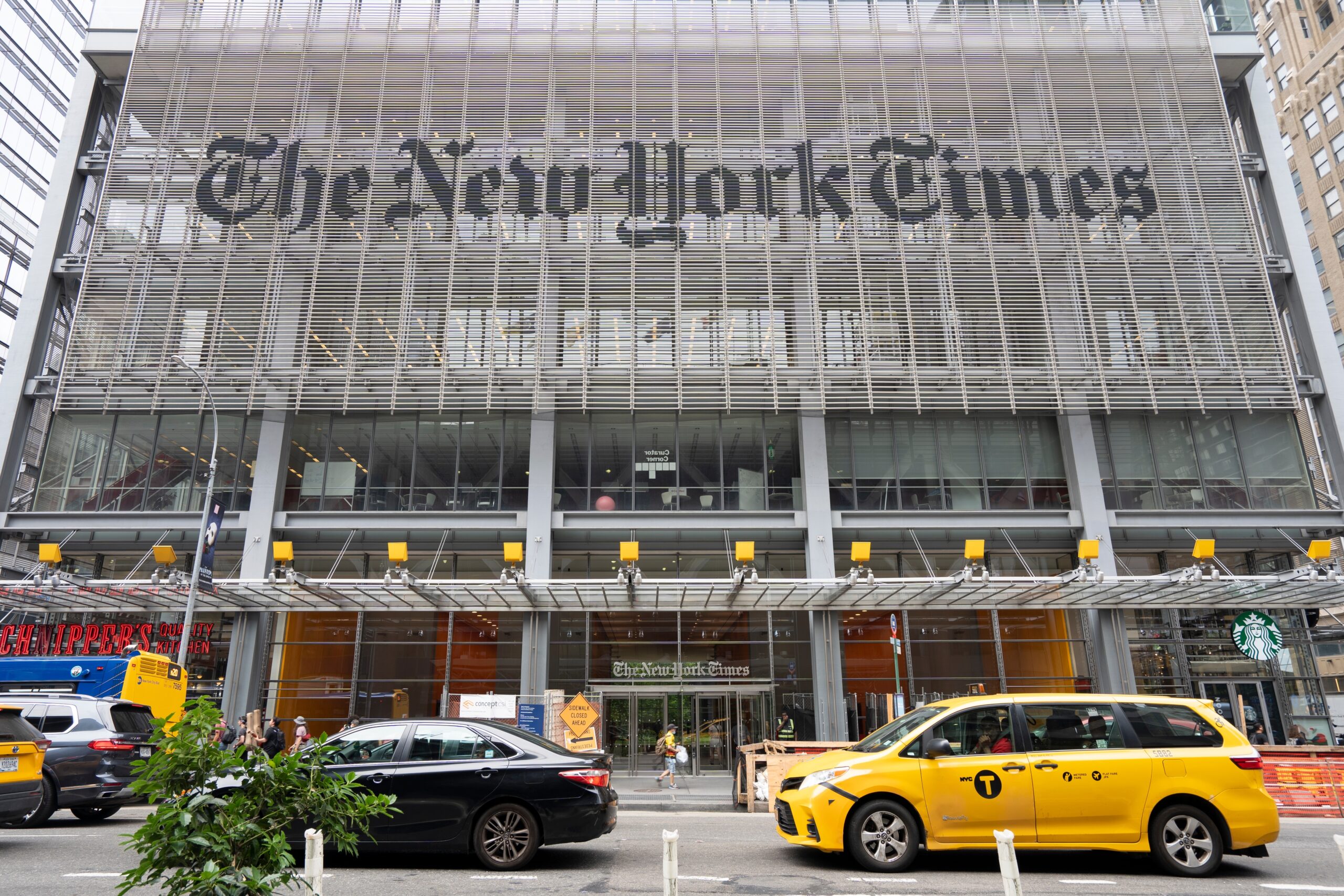
| THE LIE The New York Times, the gold standard of journalism, is facing yet another attack on its First Amendment rights, this time from a shareholder lawsuit over its Israel coverage. |
| THE TRUTH The people suing the Times are not critics trying to silence it. They are its own investors, including the Florida state pension fund. They argue that while the Times’ board assured shareholders that the paper met its editorial standards, the paper’s blatantly biased Israel coverage proved they did not meet those standards. Holding a company to its own promises is not an attack on the free press. It is accountability. |
| BACKGROUND The New York Times Company is publicly traded. Its board of directors answers to shareholders and is responsible for overseeing the company’s core product: its journalism. On September 23, 2026, the State Board of Administration of Florida and the National Center for Public Policy Research filed suit against The New York Times Company in New York County Supreme Court, demanding internal records the Times had refused to produce for four months – the majority relating to its coverage of the Israel-Hamas war. Free Beacon The suit includes testimony from a Jewish former Times employee who spent nearly a decade on the paper’s video desk. She raised concerns about antisemitism and anti-Israel bias at least 15 separate times between 2019 and her March 2026 departure – through her managers, the standards desk, and human resources – and was consistently ignored. The Times’ Israel coverage has drawn sustained criticism for years. Pro-Israel media watchdog CAMERA has documented recurring factual errors, skewed story placement, and lopsided opinion pages going back more than a decade. [Camera] |
| TRUTH EXPLAINED This is a corporate governance case, not a censorship case. The shareholders are not asking the Times to change its opinions. They want to know why the board told investors the paper met its standards while it kept publishing material that violated them. The demand letter puts it plainly: “The Company’s failure to prevent false reporting about Israel and other topics has exposed it to reputational and financial risk.” The Epoch Times The Times’ own corrections column tells the story. Uthmeier said his office counted 72 recent errors that the Times itself admitted in its corrections column, in a single coverage area, over just eight months. A paper that meets its own standards does not need to correct itself that often.Florida Phoenix] The Times’ star columnist published an explosive accusation against Israel. On May 11, 2026, Nicholas Kristof, a longtime Times opinion columnist and two-time Pulitzer Prize winner, published “The Silence That Meets the Rape of Palestinians.” The column accused Israeli forces of sexually assaulting Palestinians, including two Palestinian “journalists.” NCPPR The Times ran a Hamas-sourced atrocity claim without proper fact-checking, then stood by it. Kristof’s column made some of the most explosive accusations ever printed against Israeli soldiers, and it relied on a Hamas-linked group for its most shocking allegation. Multiple independent reports have since discredited the column. The Washington Free Beacon called it a “dog-rape libel.” Even so, on May 21, Times opinion editor Kathleen Kingsbury said the paper stood by the column. Free Beacon A Jewish employee warned the Times for seven years and was shown the door. According to the lawsuit, a Jewish former staffer raised concerns about antisemitism and anti-Israel bias in the newsroom at least 15 times over roughly seven years. She went to Human Resources repeatedly, and nothing changed. According to the filing, a human resources representative told her that if she didn’t like the paper’s values, she should “go find a place whose values align with yours.” She left the paper in March 2026. Her account is central to the claim that the board failed at its most basic job. Fox News The Times went soft on a Senate candidate who is a fierce critic of Israel. In a June 4, 2026 investigation, the Times said it “could not corroborate” allegations from Graham Platner’s former girlfriend, even though she pointed reporters to women they never contacted. Critics across the political spectrum called it a “catch and kill.” Days later, Politico reported that a second woman, a Democrat, said Platner raped her, and his campaign collapsed. The shareholders also say the Times downplayed Platner’s Nazi tattoo. Washington Free Beacon Same story, opposite framing. In March 2026, the Times covered social media posts by two political spouses. It labeled pro-Israel posts by Corinne Levy Goldman, wife of Rep. Dan Goldman, “hateful or insensitive.” It described posts by Rama Duwaji, wife of NYC Mayor Zohran Mamdani, that celebrated Palestinian terrorists as “Support for Palestinian Cause.” As the demand letter notes, the paper covered both spouses “but at no point treated them alike.” NY Times The bias is measurable and long-running. CAMERA’s year-long study of the Times’ opinion pages found the paper was nearly 7 times more likely to publish op-eds primarily critical of Israel than op-eds primarily critical of Palestinians. During the 2014 Gaza war, it ran 3 anti-Israel pieces for every pro-Israel one. Camera The news pages show the same pattern today. A new peer-reviewed study by Edieal Pinker of Yale School of Management found that the Times’ reporting after October 7 consistently portrayed Palestinians as “passive victims” and Israel as the “sole aggressor.” The study examined 1,559 Times news articles from October 7, 2023 through June 7, 2024. Taylor and Francis, Jerusalem Post |
| QUOTES “The public deserves a better picture of how the Times manufactures the news when Jews or Israel are involved.” – Anonymous Jewish whistleblower, former NYT video desk employee |
| TAKEAWAY The New York Times wants readers to see this lawsuit as an attack on journalism. It is the opposite. The Times’ own investors are asking why a paper that promises fairness published a Hamas-sourced libel and then stood by it. They are asking why it went easy on an anti-Israel candidate facing serious allegations, why it judged identical stories by whether the subject supported Israel, and why it told a Jewish employee who raised concerns to find another job. When a state pension fund takes you to court over your editorial standards, you can’t wave it away as censorship. It is a reckoning. |