On March 30, 2026, Tucker Carlson aired an interview with Bishop Joseph Strickland, who called the conflict in Gaza “the holocaust of our time.” The comparison between Gaza and the Holocaust is a common one among pro-Palestinian activists, who also regularly compare Israelis to Nazis.
The claim that Israel’s military campaign in Gaza is “like the Holocaust” is profoundly inaccurate and morally disturbing. It equates a defensive war against a terrorist organization with the Nazi regime’s deliberate, industrialized genocide of six million Jews—two-thirds of European Jewry—through gas chambers, death camps, mass shootings, starvation, and a systematic extermination campaign carried out solely because the victims were Jewish.
Scale
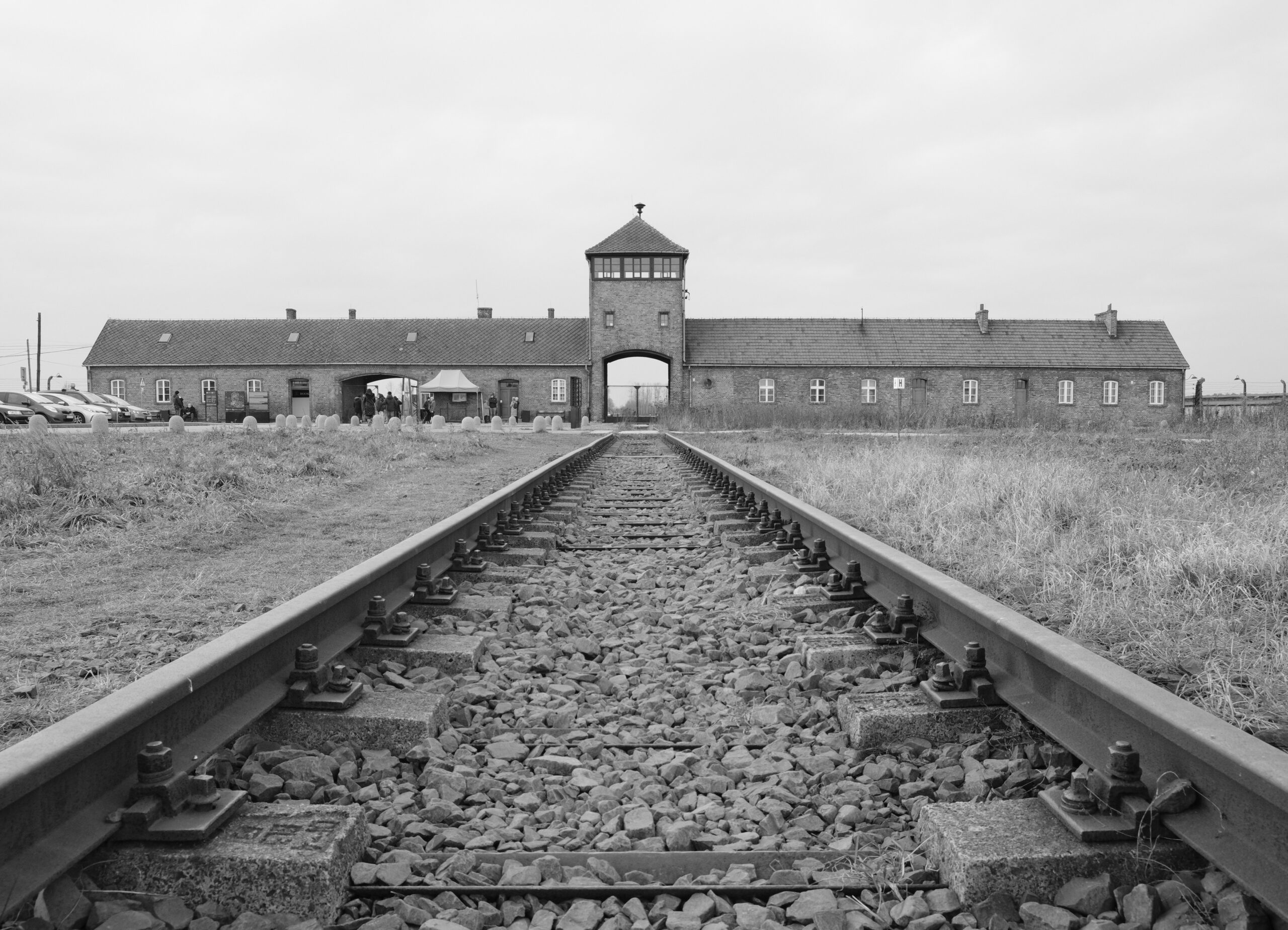
The Holocaust was the murder of approximately six million Jews in a coordinated, state-directed campaign of annihilation during World War II.
In the Gaza conflict, triggered by Hamas’s October 7, 2023 attack that massacred about 1,200 Israelis (mostly civilians) and took over 240 hostages, the Hamas-run Gaza Health Ministry reports approximately 72,000–75,000 Palestinian deaths as of early 2026, out of a pre-war population of roughly 2.3 million.
Hamas has been widely documented to inflate and distort death toll figures, including by combining combatants, natural deaths, and duplicate entries. Even accepting Hamas’s figures at face value, Israeli estimates indicate that a substantial portion of the dead are Hamas combatants—approximately 58,000 fighters—leaving roughly 13,000–14,000 noncombatant deaths. That yields a civilian-to-combatant ratio of about 0.24:1, far below the UN urban warfare average of roughly 9:1. This alone undermines claims of genocidal targeting.
Moreover, the Gaza population has continued to grow. Over 500,000 children under ten were vaccinated in Gaza in 2025—around 150,000 more than pre-war population estimates for that age cohort. Populations do not grow under conditions of genocide.
So no—the Gaza death toll is not comparable in magnitude or character to the Holocaust’s systematic eradication of an entire people.
Conduct
The comparison collapses further when examining the agency and intentions of the two populations involved.
Jews during the Holocaust did not seek war or confrontation. They sought only to live as ordinary citizens, often assimilating or fleeing when possible. There were no Jewish political charters calling for Germany’s destruction, no organized Jewish attacks on German civilians designed to trigger extermination, and no widespread Jewish public support for sustaining conflict. Resistance, where it existed (such as in ghettos or partisan groups), was desperate self-defense against an inescapable genocidal campaign—not a strategic choice to prolong war.
By contrast, multiple Palestinian surveys have found significant levels of support for continued armed resistance. Reports have cited figures such as 98% expressing pride in the October 7th massacre, and even amid prolonged devastation, many Gazans still express support for Hamas’s continued rule and armed struggle. Hamas polling and governance data similarly show substantial opposition to disarming the group, even if doing so would end the war. This indicates a population embedded in an ongoing political-military conflict, not one subjected to unilateral extermination.
Intent and methods
Nazi Germany pursued the total destruction of Jews as a matter of racial ideology, with no military necessity, no battlefield logic, and no escape offered. It was a program of extermination for its own sake.
Hamas’s founding charter and the October 7 attacks—including mass murder, rape, torture, and the deliberate targeting of civilians—demonstrate genocidal intent toward Jews and Israel. Israel’s military operations, by contrast, are directed at Hamas militants and infrastructure embedded within a densely populated urban environment, where Hamas systematically places military assets in civilian areas, including hospitals, schools, and mosques, and uses human shields. This practice is widely documented and significantly contributes to civilian casualties by design.
Under the 1948 Genocide Convention, genocide requires “specific intent to destroy, in whole or in part, a protected group as such.” Israel, by contrast, has employed extensive civilian-warning measures that are rare in modern warfare, including phone calls, text messages, leafleting, evacuation corridors, and the controversial “roof-knocking” technique using non-lethal munitions to warn of imminent strikes. These measures do not eliminate civilian harm in the fog of war, but they are inconsistent with an intent to indiscriminately destroy civilians.
Holocaust scholars and historians have repeatedly rejected Holocaust analogies to Gaza as historically and morally incoherent. As one expert summarized, Nazi ideology demanded the destruction of Jews simply because they were Jews, whereas the Gaza conflict is a war initiated and sustained by a terrorist organization that rejects peace, embeds itself among civilians, and explicitly calls for Israel’s destruction.
Ideology
Hamas’s ideology is explicitly rooted in Islamic sources that call for the genocide of Jews. Hamas defines itself as an Islamic Resistance Movement whose way of life is Islam, with the Quran as its constitution. Its 1988 Charter (which remains foundational despite a 2017 document that softened language for external audiences) directly quotes a hadith from Sahih al-Bukhari and Sahih Muslim: “The Day of Judgment will not come about until Muslims fight the Jews (killing the Jews), when the Jew will hide behind stones and trees. The stones and trees will say O Muslims, O Abdullah, there is a Jew behind me, come and kill him.” It also declares that “Israel will exist and will continue to exist until Islam will obliterate it.”
By contrast, no Jewish religious texts, movements, or leaders articulated a doctrine calling for the genocide of Germans or the German people.
Exit
Unlike Jews during the Holocaust, Gazans are not imprisoned in extermination camps with no exit.
Tens of thousands have left Gaza since October 2023—estimated at around 40,000 people, nearly 2% of the pre-war population—primarily through the Rafah crossing into Egypt and other arrangements. Even during the war, limited evacuations have occurred for medical treatment and humanitarian reasons, and post-ceasefire openings have allowed additional movement, including returns.
If Gazans are described as needing “liberation” in a Holocaust sense, the question becomes: liberation from what? From Hamas governance, which many continue to support in polls despite the war? From a territory they govern internally, from which exit has been possible (though constrained by security restrictions, Egyptian policy, and Hamas’s own control measures)? The analogy fails because one population was trapped under an externally imposed, totalizing extermination regime; the other exists within a complex armed conflict involving internal governance, external borders, and active political support for an armed faction.
Takeaway
Bishop Joseph Strickland’s reckless claim that the war in Gaza is the “Holocaust of our time” is a shameful betrayal of historical truth, Christian witness, and basic moral clarity.
By comparing Israel’s defensive war against a genocidal jihadist group to the Nazi murder of six million Jews, Strickland turns victims into villains and villains into victims. He trivializes the unique horror of the Holocaust and repeats the same lies that have justified violence against Jews for centuries. It is a dangerous distortion from a bishop who should know better.
Sources
YouTube, Statista, Scientific American, National Archives, Hamas, Henry Jackson Society, JCFA, New York Post, UN, World Health Organization, CIA, PalWatch, CSS, NATO, IDF, Cincinnati Enquirer, JNS