
Former congresswoman Marjorie Taylor Greene has once again returned to one of her favorite obsessions: the claim that Israel—a nation smaller than New Jersey, with roughly nine million people—somehow owns and operates the United States government.
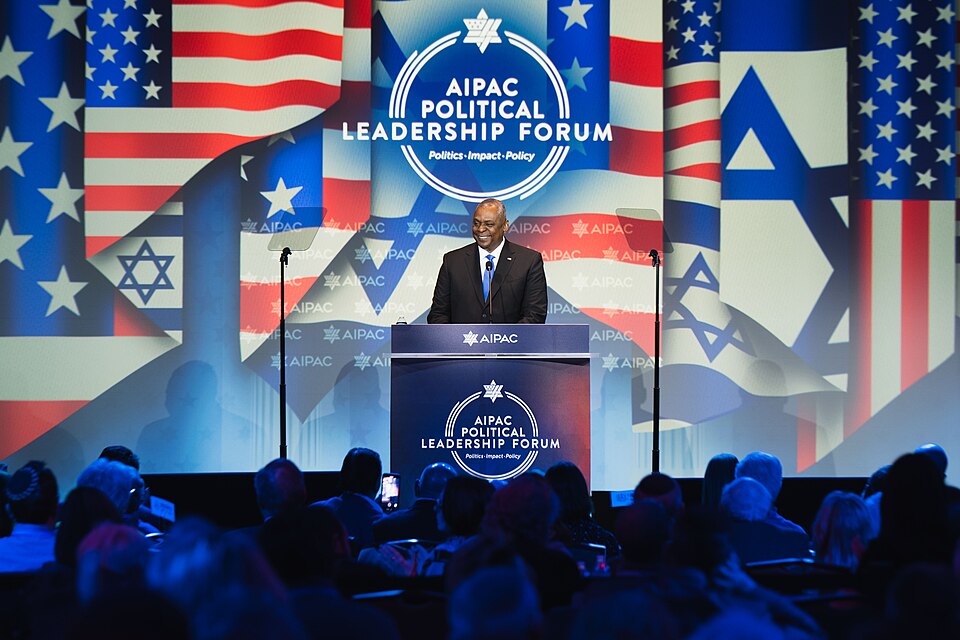
On May 25, 2026, Greene appeared on Alex Jones’s show and claimed that AIPAC, the pro-Israel lobbying organization, had effectively admitted to “buying” congressional seats and installing candidates who would be “loyal to Israel.”
The Tweet
Greene’s accusation centered on a May 20, 2026 post from AIPAC, published the day after Ed Gallrein defeated incumbent Rep. Thomas Massie in Kentucky’s Republican primary.
AIPAC had invested heavily in the race—roughly $9 million by some estimates—in a deliberate effort to unseat Massie, who has introduced legislation targeting AIPAC directly and routinely accuses Israel of controlling American politics and driving domestic policies he opposes.
The organization had also contributed to Clay Fuller’s campaign in Georgia. Fuller replaced Greene herself after she left Congress in January 2026.
Here is what AIPAC’s post actually said:
“Ed Gallrein’s victory in KY and Clay Fuller’s win in GA ensures two outspoken pro-Israel voices are positioned to fill seats previously held by outspoken detractors, Thomas Massie and Marjorie Taylor Greene. Our community was proud to help pro-Israel candidates win these races.”
At no point does AIPAC claim to have purchased candidates. At no point does it describe its supported candidates as being “loyal to Israel.” It says exactly what political organizations routinely say: that it helped elect candidates who share its policy views.
AIPAC is run by American citizens and funded by American citizens. It supports candidates who favor a strong U.S.-Israel alliance because its members believe that alliance serves American interests. Supporting a foreign-policy preference is not the same thing as pledging loyalty to a foreign government.
Greene knows the difference. She is counting on her audience not to.
The Selective Outrage Is the Tell
If Greene’s concern were genuinely foreign influence in American politics, one might expect her to devote at least some attention to the foreign governments that spend enormous sums trying to shape U.S. policy.
She does not.
In 2023 alone, registered foreign lobbying expenditures in Washington included approximately $101 million from Saudi Arabia, $85.4 million from China, $41.7 million from the United Arab Emirates, and an astonishing $235 million from Liberia. These were foreign governments spending foreign money to influence American decision-makers.
During the same period, the countries generating the most activity under the Foreign Agents Registration Act (FARA)—the law specifically designed to track foreign influence operations—included Saudi Arabia, Ukraine, the Democratic Republic of the Congo, the UAE, and Bangladesh. Israel was not among the top twenty.
The pattern continued after Donald Trump’s reelection in November 2024. Foreign agents representing Ukraine, South Africa, Taiwan, Armenia, the UAE, Turkey, South Korea, Somaliland, France, Switzerland, Togo, India, and Serbia all engaged with influential conservative institutions such as the Heritage Foundation in efforts to shape U.S. policy. Israel was not among them.
Between February and August 2025, Qatar, the UAE, Egypt, Bahrain, and the Kurdistan Regional Government all reported direct lobbying contacts regarding the National Defense Authorization Act—one of the most consequential pieces of national-security legislation considered by Congress each year.
Once again, Israel was absent.
Then there is Qatar, which operates on an entirely different scale. Beyond traditional lobbying, Qatar has spent billions on soft-power influence campaigns targeting American universities and has aggressively expanded its footprint in American media and public discourse.
Greene has had remarkably little to say about any of it.
Two Standards, One Explanation
Greene also appears untroubled by pro-Palestinian political action committees such as PalPAC and American Prosperities, which are spending millions of dollars to influence congressional races and promote candidates who share their foreign-policy preferences.
American citizens organizing, donating, and advocating for candidates is apparently only suspect when those citizens support the U.S.-Israel alliance.
Bottom Line
The double standard is difficult to miss.
Greene and Massie have constructed a worldview in which Americans who believe a strong relationship with Israel benefits the United States are treated as foreign agents, puppets, or traitors. Yet foreign governments spending tens or hundreds of millions of dollars to influence American policy rarely seem to warrant the same outrage.
That raises an obvious question: if the concern is really foreign influence, why is Israel always the target while so many actual foreign influence campaigns are ignored?
Sources
Russia Today, Politico, AIPAC, PalPAC, The American Prospect, OpenSecrets, ISGAP, Quincy Institute, Washington Examiner, Washington Examiner