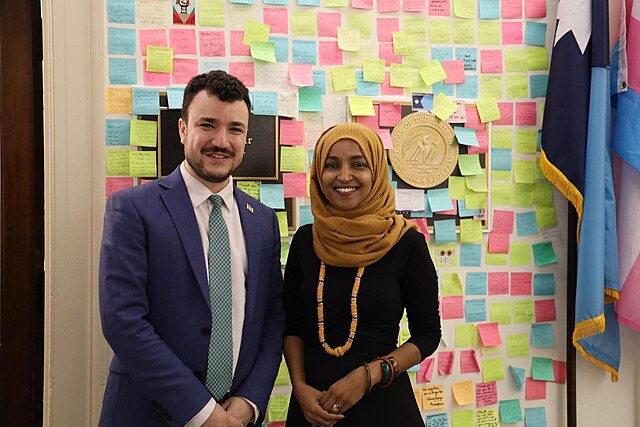
On January 15, 2026, New York City Mayor Zohran Mamdani tweeted that “the crackdown on pro-Palestinian free speech continues.” The statement followed a court ruling that allows the Trump administration to rearrest Mahmoud Khalil, a Syrian-Algerian national, for possible deportation. However, the claim that pro-Palestinian views are being suppressed in the United States contradicts a substantial body of evidence showing that such sentiment is now widespread and mainstream, while pro-Israel voices increasingly report harassment, scrutiny, and professional consequences.
Mamdani’s own political success undercuts his claim. Analysts note he was elected largely due to outspoken pro-Palestinian and anti-Israel positions, including publicly threatening to arrest Israeli Prime Minister Benjamin Netanyahu if he visits New York City. If pro-Palestinian speech were truly suppressed, Mamdani’s electoral victory would be difficult to explain.
Pro-Palestinian sentiment is widespread in the United States. A Harvard Kennedy School analysis described pro-Palestinian protests as the largest sustained protest movement in U.S. history triggered by a foreign event, with roughly 12,400 pro-Palestinian protests between October 7, 2023 and June 7, 2024 alone. This level of mobilization demonstrates not suppression but rather extraordinary freedom to organize and express dissent.
Some public figures report professional consequences for not adopting pro-Palestinian positions. Musician Azealia Banks said she withdrew from a music festival after being pressured to issue a pro-Palestine statement. In 2025, more than 1,800 actors, entertainers, and producers signed a pro-Palestinian pledge to boycott Israeli film institutions, and hundreds more signed letters accusing Israel of “genocide.” None faced professional or legal consequences.
A week before Mamdani’s tweet, pro-Palestinian demonstrators gathered outside a Manhattan synagogue, where they chanted support for Hamas, hurled antisemitic slurs, and threatened the Jews inside. No legal repercussions followed. Under Mayor Mamdani, New York authorities have taken action against pro-Israel groups such as Betar, which ceased operations following an investigation by the state attorney general, while pro-Palestinian organizations continue to operate freely.
Pro-Palestinian activists themselves have stated publicly that their messaging has become mainstream. University of Chicago Professor Eman Abdelhadi said the movement successfully embedded pro-Palestinian views in national culture. “Put Palestine in the national consciousness? We did it. Make people sympathetic to Palestine? We did it. Now you have White boys on the north side of Chicago being like, ‘Hey man, free Palestine!'” Abdelhadi stated.
Media figures aligned with the pro-Palestinian Left have echoed this assessment. In 2025, The Young Turks host Ana Kasparian stated that Israel is widely loathed internationally and among young Americans across the political spectrum. Speaking to Israelis, Kasparian declared, “You are hated internationally. Hated. The whole International community loathes you. Young American citizens in this country, both Left and Right, loathe you.”
The Trump administration’s deportation action against Mahmoud Khalil is tied to alleged immigration violations and his role as a pro-Hamas agitator. Khalil, who has said the October 7th massacre of Israelis was “unavoidable,” leads Columbia University Apartheid Divest, a group that openly supports Hamas. Under Khalil’s leadership, Columbia University Apartheid Divest led campus takeovers that involved barricading buildings, disrupting classes, and harassing Jewish students.
The facts reveal a reality opposite to Mamdani’s claim. Pro-Palestinian views are not being silenced in the United States. On the contrary, they are widespread, openly expressed, and increasingly mainstream, while pro-Israel advocacy has become the more controversial position. Pro-Israel groups and individuals face greater scrutiny, social backlash, and institutional targeting. The narrative of suppression serves to obscure this reality and position a dominant movement as an oppressed minority, inverting the actual power dynamics in contemporary American discourse on the Israeli-Palestinian conflict.